 Русский
A Guide to the 8 Most Common Types of Pasta Noodles
Standing in the pasta aisle at your local grocery store can feel overwhelming. Rows upon rows of boxes featuring different shapes with names you struggle to pronounce correctly, each promising authentic Italian flavor.
Understanding the different types of pasta unlocks the secrets to authentic Italian cooking, as each type of pasta noodle shape serves a specific purpose within Italian cuisine. When you match the right pasta with the right preparation and ingredients, you create a flavor harmony that transforms a simple dish into something extraordinary.
Understanding the Basic Pasta Categories
Before diving into specific varieties, it’s helpful to understand how different types of pasta noodles are categorized. Pasta can be produced in two main production methods: fresh and dried. Fresh pasta, made with eggs and softer wheat, yields a more tender texture when cooked. In contrast, dried pasta, crafted from durum wheat and water, is a more cost-effective solution.
Additionally, pasta shapes are divided into two primary categories: long and short. Long pasta works beautifully with oil-based sauces, light tomato preparations, and seafood dishes because the lengthy strands get coated evenly in the sauce. Meanwhile, short pasta is helpful with chunky vegetable sauces, meat preparations, and cream-based dishes because its various shapes and nooks trap and hold heartier sauces. Then there are also stuffed pastas, but we’ll get to those later.
Most importantly, remember that pasta shapes aren’t random; they’ve been engineered for function over centuries. The ridges, curves, and hollows in different types of pasta are intentional designs that help sauces adhere properly and create a perfect bite every time.
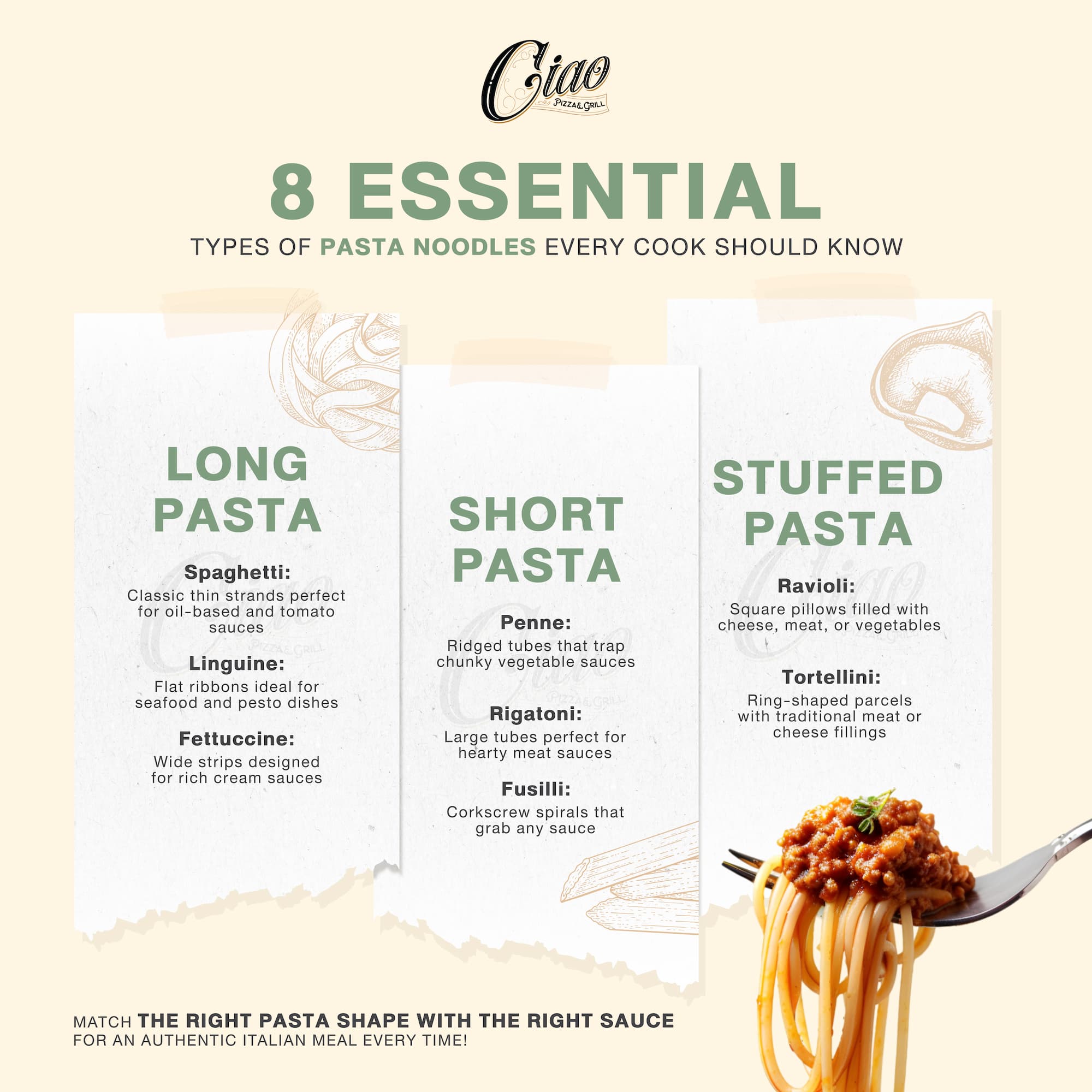
8 Essential Types of Pasta Noodles Everyone Should Know
Long Pasta
Spaghetti is the most recognizable pasta, and for good reason. These classic thin strands provide the perfect foundation for oil-based sauces such as aglio e olio, traditional tomato marinara (with meatballs too), and simple herb preparations. The smooth, round surface allows lighter sauces to coat evenly around the noodle without overwhelming the pasta itself.
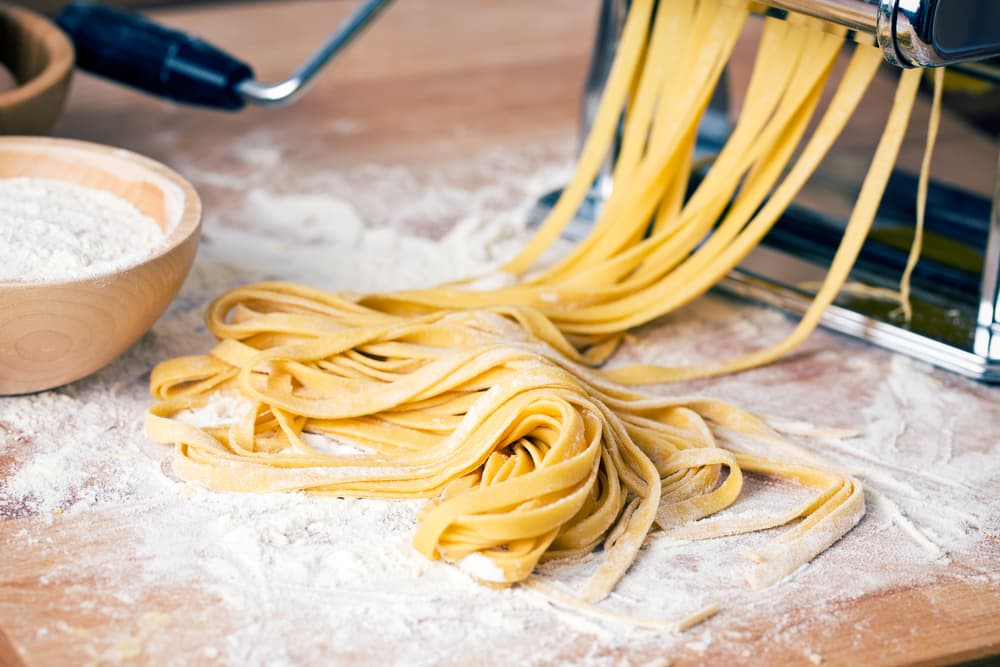
Linguine is a flatter, slightly wider alternative to spaghetti that gives more surface area for sauce to cling to. This ribbon-like pasta excels with seafood dishes, particularly clam and shrimp preparations, where the sauce carries the flavor. Furthermore, linguine’s shape makes it ideal for pesto, as the sauce sticks beautifully to the flat strands.
Fettuccine represents the luxurious end of long pasta varieties. These wider ribbons were practically designed for cream sauces, with their most common usage being with Alfredo or carbonara.
Short Pasta
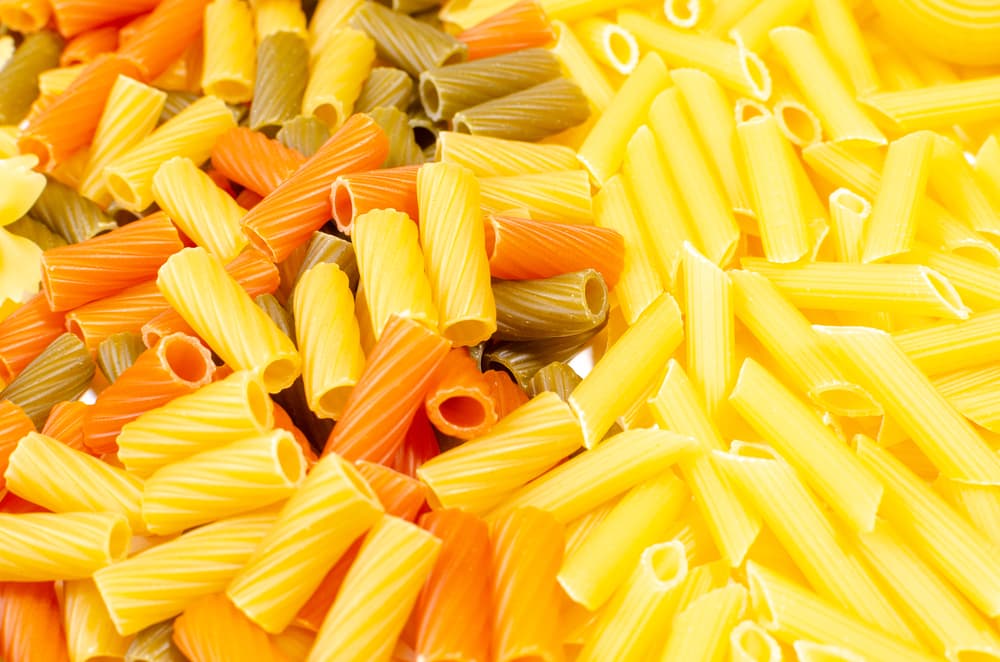
Penne features distinctive tube shapes with angled cuts and ridged surfaces. This design makes penne exceptional for chunky vegetable sauces, as the hollow interior and textured exterior trap and lodge ingredients beautifully. Try preparing penne with an arrabbiata or primavera.
Rigatoni takes the tube concept even further, with larger openings and more pronounced ridges. These substantial pasta tubes handle the heartiest meat sauces with ease, making them perfect for thick Bolognese, sausage dishes, and hearty baked pastas.
Fusilli grabs onto virtually any sauce with its iconic corkscrew shape. The curved spirals create numerous surfaces for sauce adhesion, making fusilli incredibly versatile for everything from simple tomato sauces to complex vegetable medleys.
Stuffed Pasta
Ravioli redefines pasta from a vehicle for sauce into a unique dish. These square pillows, filled with cheese, meat, vegetables, or a combo, require only light sauce preparations that complement rather than overpower their interior flavors.
Tortellini are ring-shaped mini “pies” traditionally filled with meat or cheese. These delicate packages work beautifully in clear broths or with light cream or pesto sauces that highlight their carefully crafted fillings.
Choosing the Right Pasta for Your Dish
While it may seem overwhelming, matching pasta with sauce only follows a few key principles. Heavy, chunky sauces pair best with sturdy shapes that can support substantial ingredients (think rigatoni with meat sauce or penne with roasted vegetables). On the other hand, lighter sauces work better with thinner pasta that presents more flavor.
Additionally, consider cooking times when planning your meal. Fresh pasta cooks in just 2-3 minutes, while dried varieties typically require 8-12 minutes. Keep this in mind, as timing becomes crucial when coordinating multiple components of your dish.
Lastly, remember that pasta shapes should complement, not compete with, other ingredients. Choose varieties that complement the sauce to make each bite delicious.
From Italy to Karon Beach: Authentic Pasta at Its Finest
Understanding these different types of pasta noodles enhances every dining experience, whether you’re cooking at home or ordering at your favorite restaurant. At Ciao Italian Restaurant in Karon Beach, our chefs select each pasta type to specifically complement our authentic Italian preparations, ensuring every dish showcases the pairing between shape and sauce.
Next time you visit our Italian restaurant in Phuket, consider exploring the pasta varieties and dishes all together. You will definitely find a new favorite combination that awakens your interest in authentic Italian cuisine.